



What Does a Real Estate Transaction Coordinator Do?

Explore the full scope of a real estate transaction coordinator's role, including workflow, tools, compliance, and how they support agents, brokers, and teams for efficient and audit-ready transactions.

Most agents do not lose deals because they cannot negotiate. They lose time, energy, and sometimes compliance footing because paperwork, deadlines, and follow-ups spiral out of control once a contract is signed.

That is where a real estate transaction coordinator comes in.

A real estate transaction coordinator manages the administrative, documentation, and compliance tasks between contract acceptance and closing. They track deadlines, organize paperwork, communicate with lenders and title companies, and prepare files for audit. They do not negotiate or represent clients. They manage the process so agents can focus on clients and revenue-generating work.

This guide breaks down exactly what transaction coordinators do, how their workflow operates, what tools they rely on, and how they fit into modern real estate operations.

A professional, high-resolution photograph of a modern real estate office where a property manager is reviewing a stack of property folders and digital tablet at a tidy desk, surrounded by evidence of active property listings and digital devices, set against a backdrop of bright, clean, contemporary office decor; completely text-free, no visible words or writing.

What Is a Real Estate Transaction Coordinator?

A real estate transaction coordinator, often called a TC, oversees the operational side of a deal after it goes under contract. Their responsibility begins when the purchase agreement is fully executed and typically ends once the file is closed and archived.

They function as process managers. Instead of advising on pricing or negotiating inspection repairs, they ensure the following:

Transaction coordinators may work in-house for a brokerage or team, or operate independently and charge per transaction. High-volume teams often rely on TCs to standardize workflows across dozens of active deals.

Key Responsibilities of a Real Estate Transaction Coordinator

The role centers on organization, communication, and risk reduction. Here is what that looks like in daily workflow.

Document Collection and Organization

Most brokerages operate under strict record retention rules. For example, the National Association of Realtors provides professional standards and documentation expectations that shape brokerage compliance policies. You can review their guidance at https://www.nar.realtor.

A TC ensures nothing is missing before a file is submitted for review.

Deadline and Task Tracking

Missed deadlines can expose agents and brokerages to liability. A structured checklist system reduces that risk.

A realistic, professionally lit scene of a residential property walkthrough by a transaction coordinator: capturing an agent systematically checking items on a tablet while stepping through a furnished, lived-in home, with organized paperwork arrayed on a nearby countertop, all within a well-kept interior space; completely text-free, no visible words or writing.

Communication With Clients and Vendors

In many transactions, confusion comes from fragmented communication. A TC keeps information centralized and documented.

Coordination With Lenders, Title, and Escrow

This is less about negotiation and more about alignment. The TC ensures no one is surprised the week of closing.

Compliance and Audit Preparation

Platforms such as SkySlope (https://skyslope.com), Dotloop (https://www.dotloop.com), and other compliance-focused systems are commonly used to maintain proper audit trails.

Step-by-Step Real Estate Transaction Management Workflow

Most successful transaction coordinators follow a repeatable process. The structure may vary by brokerage, but the stages are consistent.

1. Contract Acceptance

Accuracy at this stage sets the tone for the entire transaction.

2. Initial Setup

This early communication reduces confusion later.

3. Document Management

Version control is critical. Multiple unsigned drafts can create compliance issues.

4. Deadline Monitoring

Proactive tracking prevents reactive scrambling.

5. Ongoing Communication

Clear documentation protects both the agent and brokerage.

6. Pre-Closing Review

This stage often reveals small issues that would otherwise delay closing.

7. Closing and Archiving

Strong archiving practices simplify future audits and disputes.

Top Tools for Real Estate Transaction Coordinators

Transaction coordinators rely heavily on software to manage complexity at scale.

A detailed, professional image showing a tech-forward property management team collaborating on workflow automation: multiple team members concentrate on a large wall display showing colorful data visualizations (charts, graphs, timelines) in a glass-walled meeting space, with laptops and mobile devices in use, maintaining a clean, modern look; completely text-free, no visible words or writing.

Dotloop

Dotloop provides document management, e-signatures, and collaborative editing. It is widely used by brokerages and integrates with many CRMs. Learn more at https://www.dotloop.com.

Brokermint

Brokermint combines transaction management with commission tracking and brokerage oversight tools. It is often used by mid-sized brokerages that need operational reporting. https://www.brokermint.com

SkySlope

SkySlope focuses on compliance and audit trails. Brokerages use it to standardize document review and enforce required forms. https://skyslope.com

Paperless Pipeline

Paperless Pipeline offers customizable workflows and permission controls for high-volume teams. https://www.paperlesspipeline.com

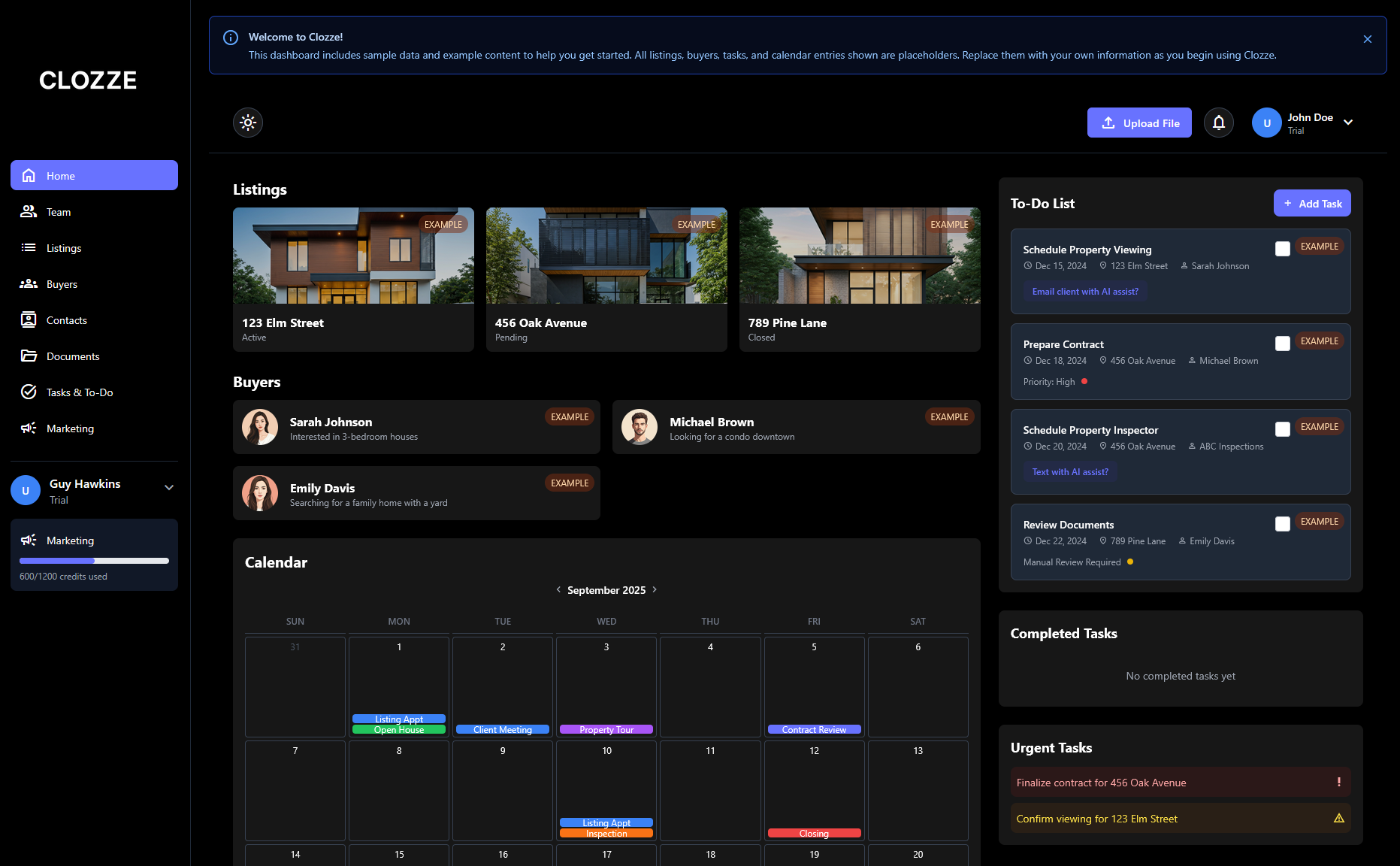
Clozze

Clozze centralizes listings, buyers, tasks, deadlines, and communication in one workspace. Instead of separating CRM activity from transaction management, it connects relationship tracking with operational execution.

For teams juggling multiple systems, Clozze can reduce duplicate data entry by syncing with legacy platforms such as Dotloop and leading CRMs. Shared dashboards give brokers visibility into every deal without relying on scattered spreadsheets or email chains.

The advantage is operational clarity. Everyone sees the same timeline, tasks, and communication history in one place.

How Transaction Coordinators Support Agents and Brokers

The value of a transaction coordinator is not just administrative support. It is operational leverage.

They allow agents to:

For brokers, a strong TC function reduces risk and improves audit outcomes.

What Is the Difference Between a Transaction Coordinator and a Real Estate Agent?

A real estate agent represents buyers or sellers, negotiates terms, and advises on pricing and strategy.

A transaction coordinator manages the administrative process after a contract is signed. They do not provide agency representation or negotiate contract terms.

In smaller operations, agents may handle both roles. As transaction volume increases, separating these responsibilities becomes operationally necessary.

Compliance and Audit Responsibilities in Real Estate Transactions

Compliance is not optional. State real estate commissions impose documentation and retention requirements, and brokerages are responsible for supervision.

A transaction coordinator typically:

Technology platforms automate parts of this process by tracking document status and creating time-stamped logs. Centralized systems reduce the risk of missing documentation across multiple email threads.

How Modern Transaction Management Improves Communication

One of the biggest failure points in real estate transactions is fragmented communication.

Modern transaction management systems solve this by:

Within Clozze, for example, agents, brokers, and coordinators can view real-time transaction status without requesting updates manually. That transparency reduces friction and prevents misalignment between team members.

When communication is centralized, delays decrease and client confidence improves.

A high-quality photograph of a CRM system in action within a real estate operation setting: agents and coordinators interact around a central workspace displaying devices (pads, laptops, smartphones) that clearly show dynamic icons and visual cues for contact management and calendar scheduling (without text), with daylight pouring into a sleek, urban office environment; completely text-free, no visible words or writing.

Common Questions About Transaction Coordinators

What does a transaction coordinator do during a sale?

They manage documentation, track deadlines, coordinate with third parties, and prepare the file for compliance review from contract to closing.

Will buyers and sellers interact with the TC?

Often yes. In many teams, the TC handles timeline updates and documentation requests while the agent focuses on negotiation and client strategy.

How do TCs prevent delays?

They track deadlines proactively, follow up on missing documents, and identify compliance gaps early.

Is transaction management software secure?

Most reputable platforms use encrypted storage and permission-based access controls. Brokerages should still evaluate each vendor’s security practices and data retention policies.

The Future of Transaction Coordination

Real estate operations are moving toward centralized systems that combine CRM activity, compliance tracking, and communication logs in one environment.

The transaction coordinator role is becoming more strategic as teams scale. Instead of simply organizing paperwork, TCs now operate as workflow managers who improve visibility, reduce risk, and standardize processes across the brokerage.

Platforms such as Clozze reflect this shift by bringing relationship management and transaction execution into a single operational framework.

As transactions grow more complex and clients expect faster updates, strong coordination is no longer optional. It is infrastructure.

Other Post
Real Estate Automation Insights

Subscribe for real estate industry insights, transaction automation updates, and product news from Clozze. Get practical guidance on modern workflows, CRM tools, and transaction management delivered straight to your inbox.

Thank you! Your submission has been received!
Oops! Something went wrong while submitting the form.
Clozze real estate transaction management platform for agents, brokers, and teams